1. Industry Background and Market Demand
Modern low-voltage
power distribution systems are undergoing a comprehensive shift from traditional manual monitoring to digital, unmanned, and refined energy management. In conventional 0.4kV distribution scenarios, enterprises relied on discrete pointer meters to collect single electrical parameters, which leads to multiple practical drawbacks: scattered installation space, inconsistent measurement accuracy of different devices, manual reading errors, and inability to realize real-time remote data transmission and unified data aggregation.
With the widespread deployment of industrial automation, smart power distribution cabinets, and building energy management systems, end users and system integrators have raised stringent requirements for integrated electrical parameter monitoring, precise energy metering, and data interconnection. The market urgently needs compact, high-precision embedded monitoring devices that can integrate multi-parameter measurement and communication functions. As a core sensing and data transmission component of low-voltage power systems, the multi-function meter has gradually replaced traditional single-function meters and become a standard configuration for intelligent transformation of distribution networks, covering industrial manufacturing, commercial buildings, municipal power distribution, and new energy power supply scenarios.
2. Core Concept and Key Technology
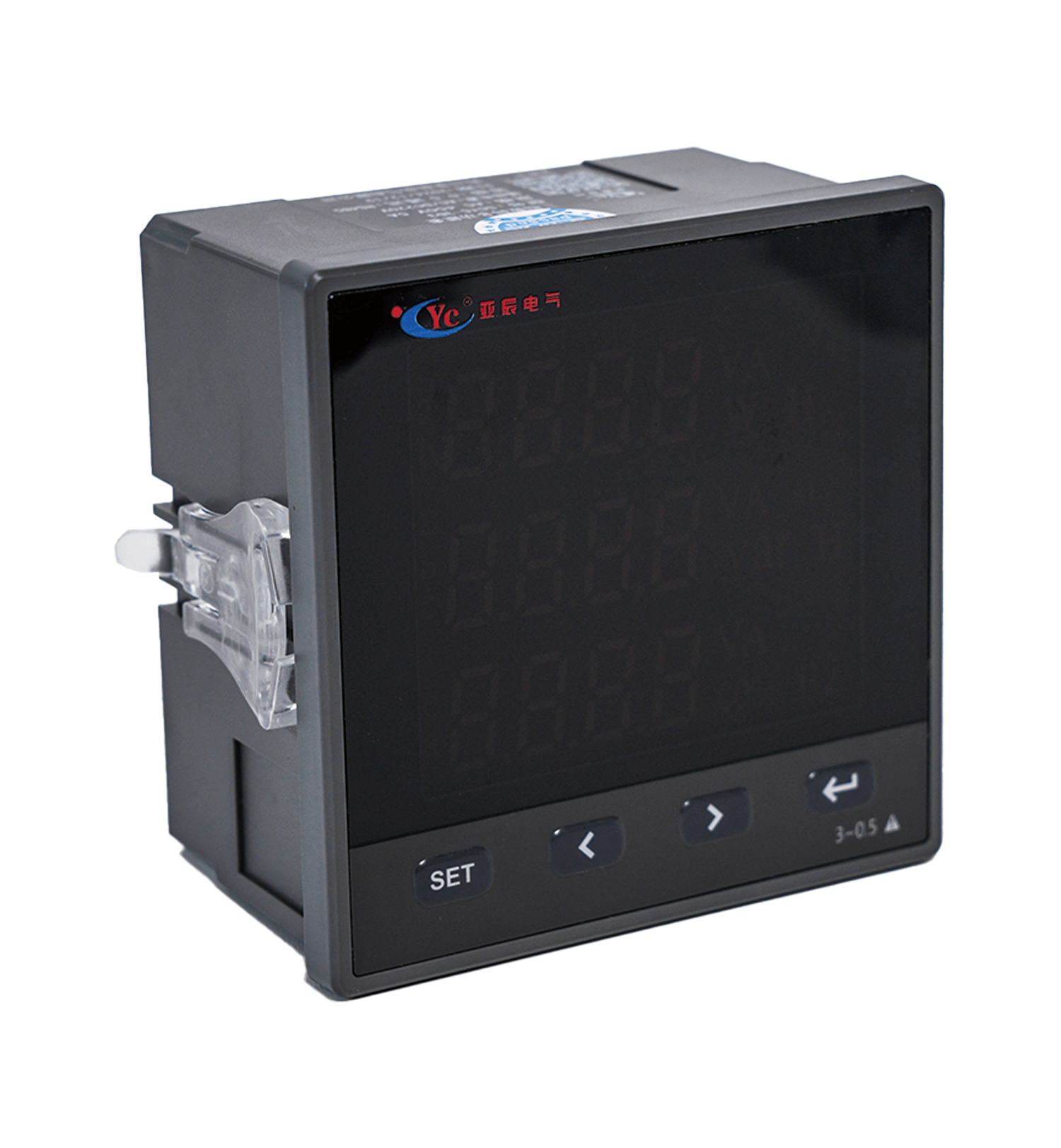
A multi-function meter is an embedded panel-mounted intelligent measuring device designed for AC three-phase three-wire and three-phase four-wire power systems. Its core design concept is integrated multi-parameter acquisition and standardized data transmission, breaking the functional limitation of traditional meters that can only monitor a single electrical index. Different from discrete measuring devices, it integrates signal sampling, data calculation, logic processing, and communication output in a single unit.
The core supporting technologies include high-precision AC signal synchronous sampling technology and Modbus RTU bus communication technology. The high-speed sampling chip realizes real-time collection of voltage, current, and frequency analog signals, and completes algorithmic calculation of active power, reactive power, power factor, and cumulative electric energy through built-in industrial microprocessors. The standard RS485 communication interface adopts Modbus RTU protocol, which supports stable data interaction with PLC, power monitoring platforms, and energy management systems, realizing dual working modes of local real-time display and remote automatic data collection. Optional harmonic analysis technology expands the device’s capability to monitor power quality anomalies, meeting the refined monitoring needs of high-precision power consumption scenarios.
3. Product Structure, Performance and Manufacturing Process
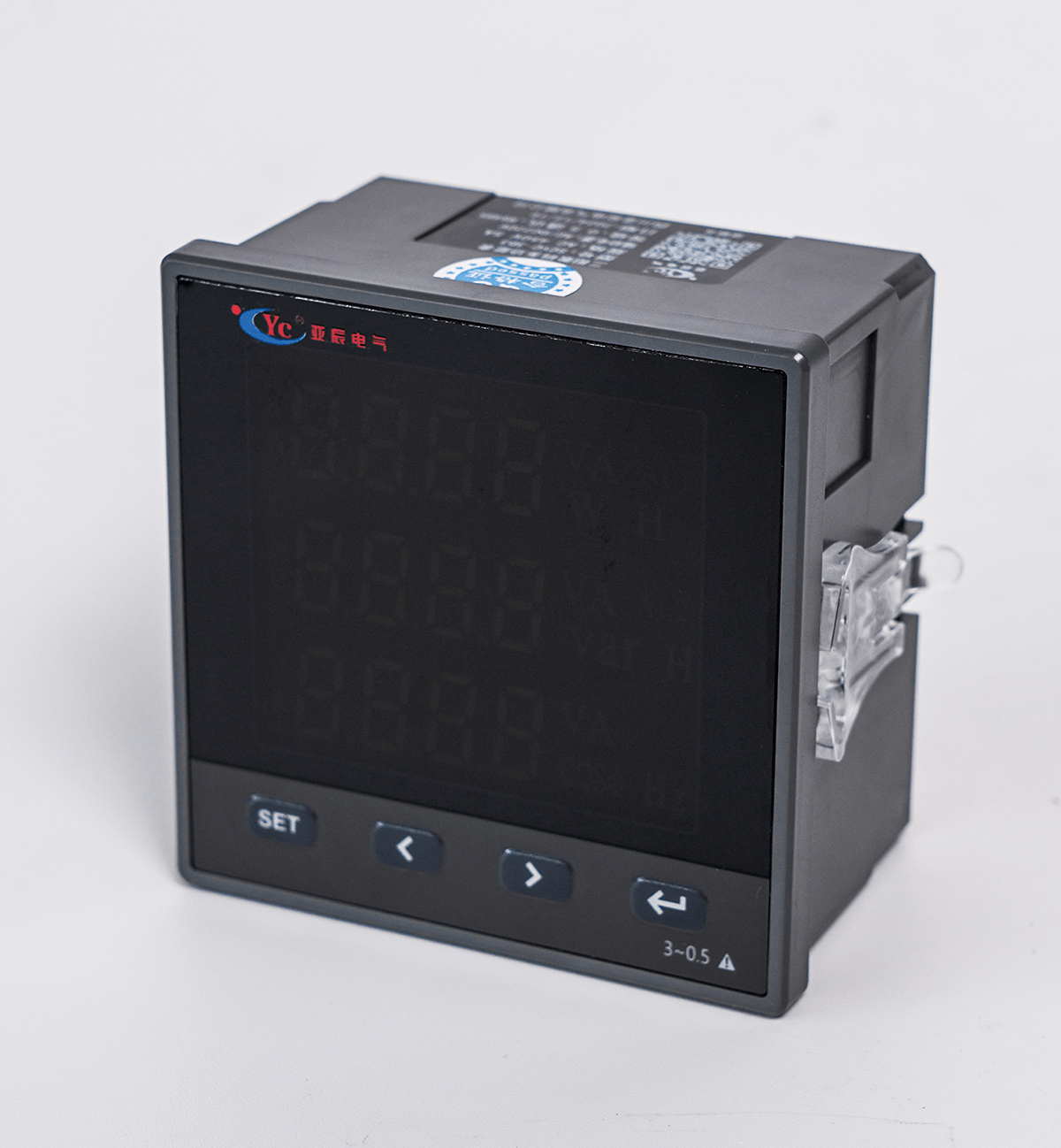
In terms of structural design, the multi-function meter adopts a standardized embedded panel structure, which is compatible with the installation size of mainstream low-voltage switchgears. The overall structure is divided into three core parts: front display module, internal signal acquisition and processing circuit module, and rear wiring and communication terminal module. The front panel is equipped with an industrial liquid crystal display and key operation units for on-site parameter viewing and function setting; the internal circuit integrates sampling resistors, operational amplifiers, microprocessors, and communication chips to complete signal processing and data calculation; the rear terminal area adopts insulated modular wiring terminals to ensure safe and stable circuit connection.
In terms of core performance, the standard model supports full-parameter monitoring of three-phase AC systems, including line voltage, phase current, active/reactive power, power factor, grid frequency, and bidirectional electric energy metering. Optional extended functions cover harmonic detection, digital switch input/output, analog signal transmission, and power event recording, adapting to differentiated monitoring requirements of different industries. The equipment maintains a measurement accuracy level of 0.5S for electric energy and 0.2 level for voltage and current in conventional working environments, with a working temperature range of -20℃ to +60℃, adapting to complex on-site working conditions of industrial power distribution.
The manufacturing process follows industrial-grade power electronic device production specifications. The circuit board adopts SMT full patch welding process to reduce circuit resistance and improve anti-interference stability; the shell is made of flame-retardant ABS engineering plastic with anti-aging and anti-electromagnetic interference coating treatment, which can resist electromagnetic interference from surrounding power equipment in switch cabinets. The finished products undergo strict aging tests, precision calibration, and communication compatibility tests before leaving the factory to ensure consistent batch performance.
4. Key Factors Affecting Product Quality and Performance
The measurement accuracy and operational stability of the multi-function meter are affected by multiple link factors throughout the production and application cycle. First, the precision of core sampling components is the primary determinant of measurement accuracy. Low-precision sampling resistors and signal amplification chips will lead to cumulative errors in voltage and current sampling, resulting in inaccurate power and electric energy calculation.
Second, on-site electromagnetic interference is a key external factor. The interior of low-voltage switchgears is densely distributed with
circuit breakers, contactors and other inductive equipment, and the instantaneous switching of equipment will generate electromagnetic radiation, which may interfere with the signal processing of the meter and cause data jitter if the anti-interference design is insufficient.
In addition, production process control and on-site installation specifications also affect product performance. SMT welding defects and inconsistent component positioning in the production process will reduce circuit stability; non-standard wiring, excessive ambient humidity, and long-term over-temperature operation in the application process will accelerate component aging and shorten the service life of the equipment. Finally, the compatibility of communication program algorithms will directly affect the stability of remote data transmission, and poorly optimized programs will cause data packet loss and delayed transmission.
5. Supply Chain and Supplier Selection Criteria
The core components of multi-function meters cover industrial microprocessors, sampling chips, communication chips, display screens, and flame-retardant structural materials. Supplier selection focuses on industrial-grade stability, batch consistency, and after-sales technical support capabilities, adapting to the long-term continuous operation requirements of power distribution equipment.
For core electronic components such as sampling and communication chips, suppliers must provide industrial-grade component certification, long-term supply capacity guarantee, and component stability test reports to avoid performance differences caused by component batch replacement. For structural materials and circuit board processing suppliers, the selection standard focuses on flame retardant grade, anti-aging performance and processing precision, ensuring that the shell and circuit board can adapt to long-term high-load operation in switch cabinets.
In terms of finished product supporting supply chain, system integration suppliers need to have complete Modbus protocol compatibility test capabilities and on-site debugging technical capabilities, ensuring that the multi-function meter can be seamlessly connected with mainstream industrial control and energy management systems. Stable supply chain matching effectively guarantees the batch quality and on-site adaptability of the equipment.
6. Industry Pain Points and Common Technical Problems
At present, the low-voltage power distribution monitoring industry still has prominent pain points in the application of multi-function meters. First, the compatibility of extended functions is uneven. Some low-cost meters have single harmonic detection data and incomplete event recording functions, which cannot meet the power quality analysis and fault tracing needs of high-end industrial scenarios.
Second, on-site communication compatibility problems are widespread. Different brands of PLC and monitoring platforms have slight differences in Modbus RTU protocol parsing rules, resulting in occasional data communication failure and data dislocation between meters and upper systems, increasing on-site debugging costs.
Third, the anti-interference performance of partial products is insufficient. In industrial sites with dense power equipment and strong electromagnetic interference, low-quality meters are prone to data drift and display abnormality, affecting the authenticity and effectiveness of monitoring data. In addition, traditional meters lack differentiated parameter adaptation functions, and cannot flexibly switch working modes according to three-phase three-wire and three-phase four-wire systems, resulting in limited application scenarios.
7. Application Scenarios and Industry Cases
The multi-function meter is mainly applied to 0.4kV low-voltage power distribution systems, and is widely used in multiple industrial and commercial scenarios as a core intelligent monitoring element of switchgears.
In industrial manufacturing scenarios, it is installed in workshop power distribution cabinets to realize real-time monitoring of production equipment power consumption, three-phase power balance detection, and energy consumption statistics, helping enterprises optimize production power consumption structure and reduce energy waste. In automated production lines, the equipment transmits operating data to the factory PLC system to realize linkage monitoring of power equipment and production equipment.
In commercial and civil building scenarios, the meter is embedded in the power distribution cabinets of shopping malls, office buildings, and residential communities, realizing refined metering of public power consumption and household power consumption, and providing accurate data support for building energy management and power fee settlement.
In municipal and new energy scenarios, it is used for power monitoring of street lamp power distribution systems, photovoltaic grid-connected low-voltage cabinets, and energy storage power distribution units, realizing real-time collection of grid-connected electrical parameters and event recording of
power grid fluctuation, ensuring stable operation of new energy power supply systems.
8. Current Trends and Future Development Direction
With the in-depth development of smart grid and industrial Internet of Things technology, multi-function meter products are evolving towards high precision, multi-dimensional power quality monitoring, wireless interconnection, and intelligent fault diagnosis. At present, the industry has gradually eliminated single-function and low-precision traditional meters, and high-integration and high-stability intelligent meters have become the mainstream market choice.
In terms of technical iteration, future products will further improve power quality monitoring capabilities, support full-band harmonic analysis, voltage flicker detection, and three-phase unbalance analysis, realizing comprehensive diagnosis of low-voltage grid power quality. In terms of communication modes, on the basis of retaining traditional RS485 Modbus communication, it will expand Ethernet and wireless communication functions to adapt to the wireless networking and cloud monitoring needs of smart distribution networks.
In addition, the equipment will develop towards intelligent integration, integrating edge computing functions to realize on-site real-time fault judgment, over-limit alarm and data preprocessing, reducing the data processing pressure of the upper monitoring platform. Meanwhile, standardized and modular design will be further popularized, improving the compatibility and scalability of products, and adapting to the personalized intelligent transformation needs of various low-voltage power distribution scenarios.
9. FAQ
Q1: What power system types can the multi-function meter adapt to?A: The standard device is compatible with both three-phase three-wire and three-phase four-wire AC low-voltage systems, covering most 0.4kV industrial, commercial and municipal power distribution scenarios, and supports flexible switching of system modes through on-site parameter setting.
Q2: What is the core advantage of replacing traditional pointer meters with this device?A: It integrates multiple measurement and monitoring functions of voltage, current, power and electric energy, replacing multiple discrete single-function meters, saving installation space and wiring costs. Meanwhile, it supports remote data transmission, realizing automatic data collection and unattended monitoring, which effectively solves the problems of low efficiency and large error of manual reading of traditional meters.
Q3: Why does occasional data jitter occur in on-site operation?A: The main causes include strong electromagnetic interference from surrounding power equipment, non-standard on-site wiring, and unstable bus communication load. The problem can be solved by optimizing wiring shielding, reducing on-site electromagnetic interference, and calibrating communication baud rate and address parameters.
Q4: Is the Modbus RTU communication of the device compatible with most mainstream control systems?A: The standard RS485 Modbus RTU protocol adopted by the device is a universal industrial communication protocol, which is highly compatible with mainstream PLC, power monitoring and energy management systems on the market. Individual compatibility problems can be solved by adjusting protocol parsing parameters on the upper computer side.

 RELATED
 RELATED
 RELATED
 RELATED

 English
 Pусский
 中文
中文 қазақ
қазақ



 واتس اب
 هاتف
هاتف