1. Industry Background and Market Demand
High-voltage power cables have become the core carrier of urban and industrial power transmission systems globally, widely deployed in
power grid construction, industrial manufacturing, transportation infrastructure and new energy power stations. Their widespread adoption stems from inherent engineering advantages, including simple structural craftsmanship, convenient field installation, low overall weight, excellent heat resistance and large-capacity power transmission performance. As a key supporting connection device for concentrating and fixing high-voltage cable grounding lines, the traditional high-voltage grounding box undertakes the critical task of guiding the induced current of cable metal sheaths to the ground.
In conventional high-voltage cable operation scenarios, metal sheaths mostly adopt single-end direct grounding or cross-bonded double-end grounding modes. Under normal operating conditions, the ground-induced voltage of the sheath stabilizes at tens of volts, and the induced current is maintained at about ten amps. However, long-term field operation data shows that cable sheath damage caused by chemical aging, electrothermal fatigue corrosion and external theft will trigger multi-point grounding faults. This abnormal state will sharply increase the sheath circulating current to a dangerous threshold, destroy the balance of the cable grounding system, and further induce floating voltage accumulation. The subsequent electrical breakdown of outer sheaths, burnout of protective devices and even damage to main cable insulation will lead to unplanned power outages and huge economic losses.
At present, the daily operation and maintenance of high-voltage cable grounding systems in the industry still relies on manual inspection and portable clamp ammeter testing. This offline detection method features obvious time lag, unable to capture real-time fluctuation data of sheath circulating current, and cannot form continuous operational state records of cable lines. With the continuous expansion of power grid scale and the improvement of power supply reliability standards, the market has formed an urgent demand for intelligent, real-time monitoring and high-safety grounding equipment, driving the iterative upgrading of the traditional high-voltage grounding box to the intelligent grounding box.
2. Core Concept and Key Technology Interpretation
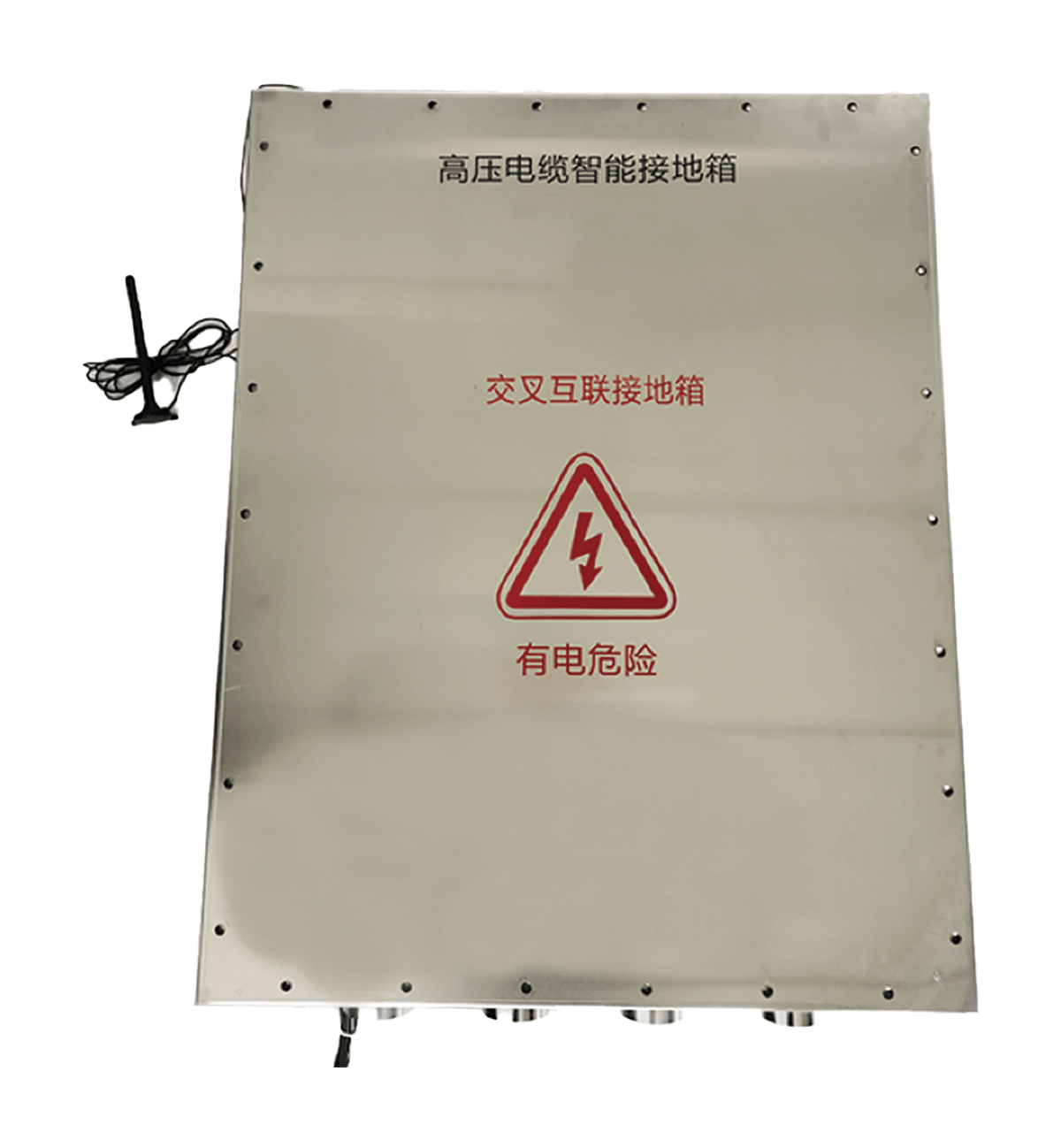
The intelligent grounding box for high-voltage cables is a integrated monitoring and protection device oriented to the full-life cycle operation of cable metal sheaths, which integrates grounding connection, real-time electrical parameter monitoring, fault early warning and equipment safety protection functions. Its core design concept is to solve the pain points of offline detection and passive maintenance of traditional grounding equipment, and realize active perception and precise early warning of cable grounding system faults.
The core supporting technologies include sheath circulating current real-time sampling technology, adaptive data acquisition and processing technology, and modular distributed control technology. Different from traditional fixed-function grounding boxes, the equipment adopts hierarchical signal collection and analysis logic, which can continuously collect key operating parameters such as grounding current and induced voltage of cable sheaths. The system can automatically identify abnormal fluctuations of circulating current caused by multi-point grounding faults, realize quantitative judgment of equipment operating risks, and provide accurate data support for power grid operation and maintenance personnel to carry out targeted maintenance. The modular design architecture is the key to realize the functional customization and scalable application of the intelligent grounding box.
3. Product Structure, Performance and Design Process
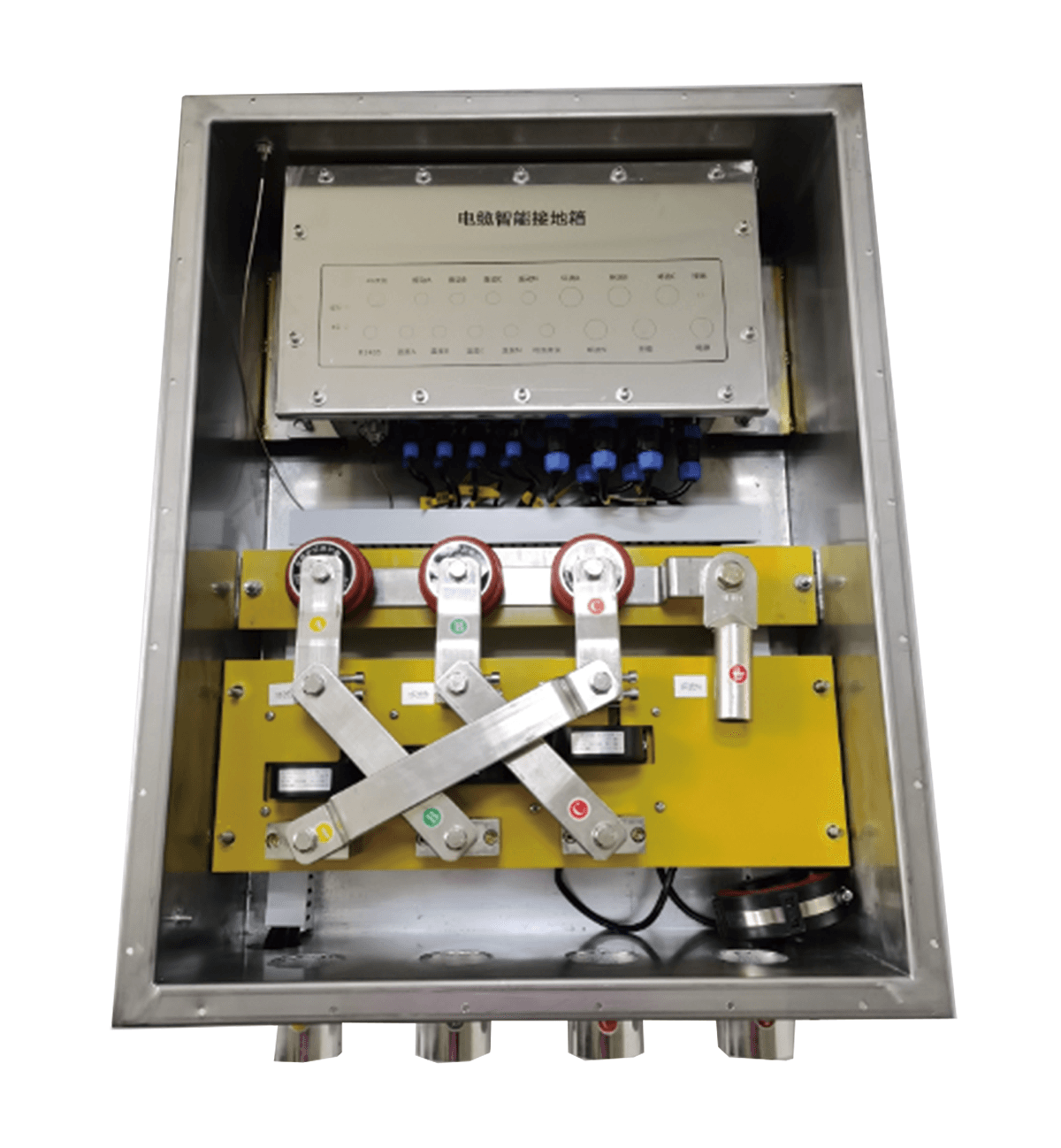
The intelligent grounding box adopts a dual-part integrated structural design, consisting of a grounding busbar assembly and an intelligent control system, with clear functional division and convenient on-site deployment and maintenance.
The grounding busbar assembly is the basic functional component of the equipment, made of high-conductivity copper alloy with surface anti-oxidation and anti-corrosion treatment. It is responsible for the centralized wiring and stable grounding of high-voltage cable metal sheaths, ensuring low-resistance grounding connection and avoiding additional impedance interference to current transmission. The structural design complies with international high-voltage power equipment installation standards, with good mechanical strength and environmental adaptability, adapting to outdoor and underground cable trench operation scenarios.
The intelligent control system is the core functional unit of the equipment, adopting modular distributed design. The system is composed of independent functional modules such as data sampling module, signal processing module, data transmission module and power supply protection module. Each module operates independently and is compatible with plug-and-play expansion. According to the actual operating environment, cable voltage level and operation and maintenance requirements of the project, field engineers can flexibly increase or decrease monitoring functions, data storage capacity and remote transmission modules, realizing personalized customized design of the equipment.
In terms of manufacturing technology, the product adopts integrated stamping and precision assembly process for the box body, with fully sealed structural treatment to achieve dust-proof, waterproof and anti-corrosion performance. The internal circuit modules adopt industrial-grade surface mounting process, with strict high and low temperature aging test and insulation withstand test in the production process, to ensure the stability and consistency of equipment performance in complex working conditions. In terms of core performance, the equipment supports 24-hour uninterrupted real-time monitoring of grounding circulating current and induced voltage, with high sampling accuracy and fast data response speed, which effectively makes up for the detection lag of traditional manual measurement methods.
4. Key Factors Affecting Product Quality and Performance
The operational stability and detection accuracy of the intelligent grounding box are affected by multiple links of material selection, structural design, module performance and on-site installation. First, the conductivity and anti-corrosion performance of the grounding busbar material directly determine the stability of the grounding loop. Low-quality conductive materials are prone to oxidation and increased resistance in humid and saline-alkali environments, leading to distorted current detection data.
Second, the precision and anti-interference ability of the data sampling module are core factors affecting monitoring performance. High-voltage power transmission sites have strong electromagnetic interference, and unqualified sampling modules will generate signal noise, resulting in inaccurate circulating current and voltage data. In addition, the sealing performance of the box body is crucial to the service life of internal intelligent components. Poor sealing will lead to moisture and dust entering the box, causing short circuit and failure of electronic modules.
Moreover, the matching degree of system modular configuration and on-site working conditions also affects equipment performance. Excessively simplified module configuration cannot meet the high-frequency monitoring demand of large-capacity cable lines, while redundant configuration will increase operating costs. Finally, standardized on-site installation and wiring process are key links to avoid artificial faults, and irregular wiring will affect the balance of the grounding system and reduce monitoring reliability.
5. Supplier Selection Standards and Supply Chain Requirements
The core components of the intelligent grounding box include conductive busbars, industrial-grade monitoring modules, sealed box bodies and power supply units. The selection of suppliers focuses on industrial qualification, product consistency and environmental adaptability of components. For conductive metal components, suppliers are required to have international power equipment material certification, providing copper alloy materials with stable conductivity and long-term anti-corrosion performance, to ensure the durability of the grounding structure.
For intelligent monitoring modules, suppliers must have independent research and development capabilities in power electronic detection technology, and provide module products that have passed electromagnetic compatibility (EMC) testing and industrial environmental adaptation testing. In terms of supply chain management, priority is given to suppliers with stable batch production capacity and complete quality inspection system, to ensure the consistency of equipment parameters in batch delivery. At the same time, suppliers are required to provide standardized after-sales technical support and component replacement services, to meet the long-term operation and maintenance needs of power grid equipment.
6. Industry Pain Points and Common Technical Problems
The high-voltage cable grounding industry has long faced prominent technical and operational pain points. First, traditional grounding equipment has no real-time monitoring function, relying entirely on periodic manual inspection. The inspection cycle is long, and sudden sheath damage and multi-point grounding faults cannot be detected in time, resulting in hidden dangers of cable insulation breakdown and equipment burnout.
Second, manual detection using portable clamp ammeters belongs to static offline detection, which can only obtain instantaneous operating data, cannot track the continuous change trend of sheath circulating current, and cannot accurately judge the aging state and fault evolution law of cable lines. Third, traditional grounding boxes have single functional design, poor scalability, and cannot adapt to the intelligent upgrading demand of different voltage levels and different scenario cable projects, resulting in low equipment compatibility.
In addition, in actual operation, the grounding system is vulnerable to external human damage and natural environmental erosion. Traditional equipment lacks anti-theft monitoring and state early warning functions, and the fault handling passivity is prominent. These industry pain points restrict the improvement of power grid operation safety and intelligent maintenance level, and also become the core driving force for the popularization of intelligent grounding box products.
7. Application Scenarios and Industry Cases
Intelligent grounding boxes are widely applicable to all scenarios involving high-voltage cable power transmission, covering urban municipal power grids, industrial park power supply, new energy power generation delivery, railway and subway power supply systems, petrochemical industrial power transmission and other fields.
In urban power grid renovation projects, the equipment is applied to underground cable trench grounding systems, realizing real-time monitoring of sheath circulating current of urban trunk high-voltage cables, effectively avoiding power failure accidents caused by grounding system faults, and improving the reliability of urban power supply. In new energy scenarios such as wind power and photovoltaic power stations, the long-distance transmission cables are prone to induced voltage fluctuation and sheath aging faults. The intelligent grounding box can continuously monitor the operating state of the cable grounding system, provide fault early warning, and reduce the operation and maintenance pressure of new energy power stations.
In heavy industrial scenarios such as petrochemical and manufacturing, the complex electromagnetic environment and harsh outdoor conditions put forward higher requirements for cable grounding safety. The modular intelligent grounding box can adapt to high-interference and high-corrosion working conditions, realize precise monitoring of grounding parameters, and ensure the safe and stable operation of industrial power transmission systems.
8. Current Industry Trends and Future Development Directions
At present, the global high-voltage cable supporting equipment industry is developing towards intelligence, modularization and full-life cycle refined management. The traditional passive protection and manual maintenance mode of grounding equipment is gradually eliminated, and real-time monitoring, active early warning and remote intelligent management have become the mainstream development trends of the industry.
In the future, the intelligent grounding box will further realize deep integration with power grid Internet of Things (IoT) systems. On the basis of existing real-time parameter monitoring functions, it will add intelligent fault diagnosis, big data trend analysis and remote equipment management functions, realizing automatic identification, precise positioning and intelligent disposal of cable grounding faults. In terms of product design, the modular architecture will be further optimized to achieve higher compatibility and scalability, adapting to ultra-high voltage power transmission and new energy grid-connected transmission scenarios.
In addition, with the improvement of global power safety standards, the equipment will develop in the direction of higher environmental adaptability, stronger electromagnetic anti-interference ability and longer service life, and realize the full coverage of intelligent monitoring for the whole high-voltage cable line, providing solid technical support for the intelligent and safe operation of the power grid.
9. FAQ
Q1: What core advantages does the intelligent grounding box have over traditional ordinary grounding boxes?
A1: Traditional grounding boxes only realize simple grounding connection without monitoring capability, relying on manual periodic inspection with serious detection lag. The intelligent grounding box integrates real-time monitoring, data recording and fault early warning functions, adopts modular scalable design, can realize 24-hour uninterrupted monitoring of sheath circulating current and induced voltage, actively discover potential faults, and completely change the passive maintenance mode of traditional equipment.
Q2: Can the modular design of the equipment adapt to different voltage level cable projects?
A2: Yes. The equipment adopts distributed modular design, with independent and expandable functional modules. According to the voltage level of on-site cables, line length and operation and maintenance requirements, the monitoring accuracy, data transmission mode and functional modules can be flexibly adjusted, which is compatible with various high-voltage cable power transmission scenarios and meets the personalized configuration needs of different projects.
Q3: How does the equipment ensure stable operation in complex electromagnetic interference environments?
A3: The internal monitoring modules of the equipment have passed professional electromagnetic compatibility testing, with built-in signal filtering and anti-interference components. The fully sealed box body structure can isolate external electromagnetic interference and environmental erosion, ensuring the accuracy of monitoring data and the stability of equipment operation in high-interference industrial and power grid scenarios.
Q4: What kind of cable faults can the intelligent grounding box effectively warn against?
A4: It can accurately identify and early warn typical faults such as cable sheath chemical aging, electrothermal damage, external theft damage and multi-point grounding faults caused by external force damage. By monitoring the abnormal fluctuation of sheath circulating current and induced voltage, it can predict potential insulation breakdown and protector burnout risks in advance.

 RELATED
 RELATED
 RELATED
 RELATED

 English
 Pусский
 中文
中文 қазақ
қазақ



 واتس اب
 هاتف
هاتف