1. Industry Background and Market Demand
The global
power distribution industry is undergoing a systematic shift toward modularization, compact layout, and intelligent unattended operation, driven by rapid urbanization, infrastructure expansion, and the upgrading of industrial power consumption standards. Traditional on-site assembled power distribution stations require on-site welding, wiring, and equipment debugging, which involve long construction cycles, high on-site construction risks, and inconsistent installation quality, failing to adapt to the fast-paced deployment needs of modern engineering projects.
Against this backdrop, box-type substations have become a mainstream alternative for medium and low-voltage power distribution systems. The growing demand for decentralized power supply in urban commercial complexes, residential communities, and mobile construction sites, coupled with the strict requirements for power supply stability in transportation, medical, and educational infrastructure, has continuously expanded the market scale of prefabricated power distribution equipment. In addition, the promotion of smart grid construction worldwide has raised mandatory requirements for remote monitoring, data metering, and dynamic power regulation of terminal power distribution equipment, further stimulating the iterative upgrading and market application of box-type substation products.
2. Core Concept and Key Technology
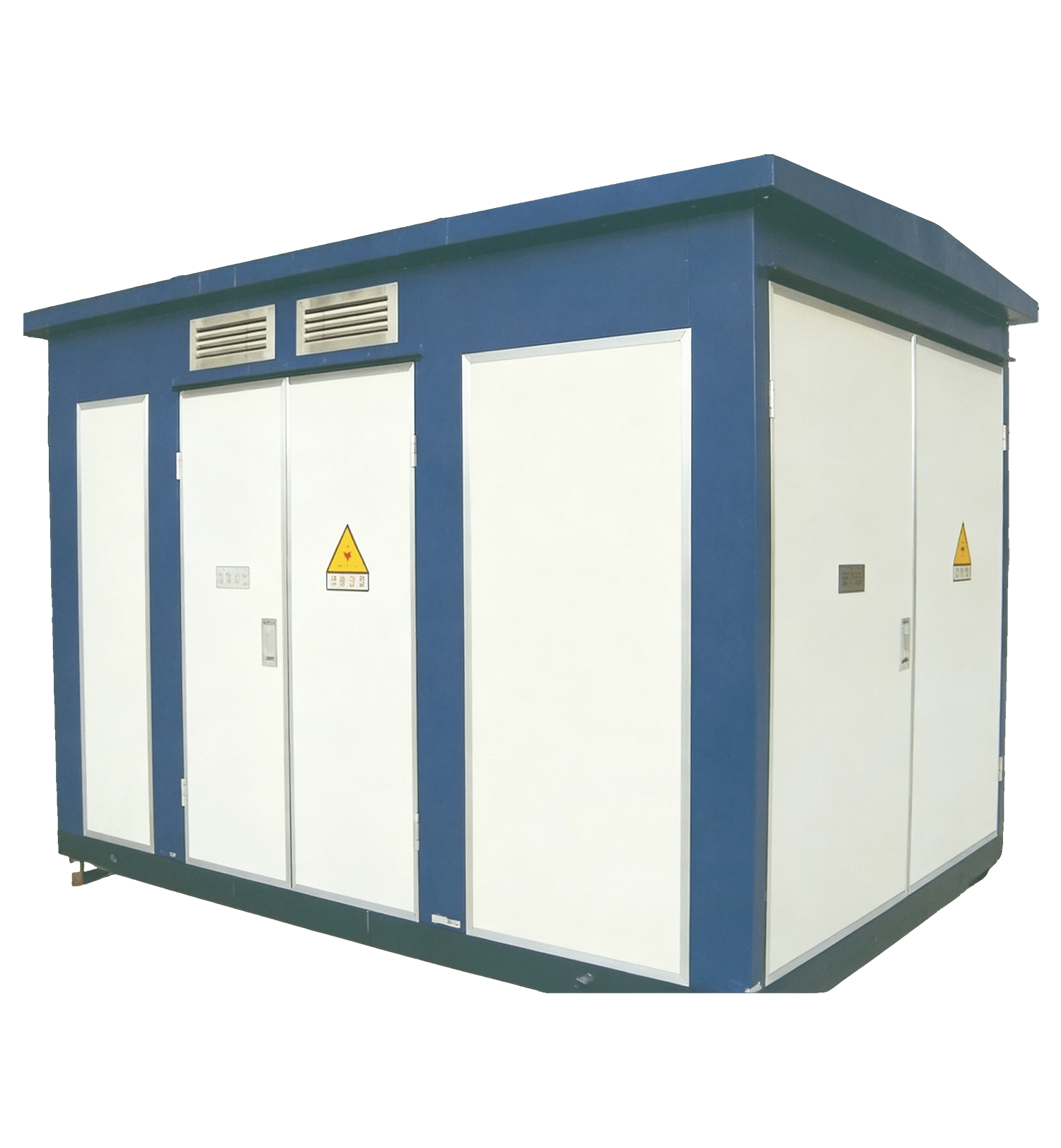
A box-type substation is an integrated prefabricated power distribution device that integrates high-voltage switchgear, power transformer, low-voltage distribution unit, intelligent low-voltage switch, and automatic reactive power compensation device according to standardized electrical wiring schemes. Different from traditional discrete power distribution equipment, this product completes all equipment assembly, wiring, debugging, and testing in the factory, realizing plug-and-play deployment after on-site installation.
The core supporting technologies focus on intelligent terminal control and integrated power quality regulation. Its four-remote function (remote control, remote measurement, remote signaling, remote regulation) is the core technical feature, which relies on embedded industrial control modules and power communication protocols to realize real-time collection of operating parameters such as voltage, current, and load rate, as well as remote switching operation and reactive power dynamic adjustment. The automatic reactive power compensation technology can dynamically match the grid load, suppress grid voltage fluctuation and reactive power loss, and effectively improve the power factor and operation efficiency of the distribution network. Modular integrated wiring technology ensures the standardized and compact layout of internal equipment, reducing line loss and equipment failure rate.
3. Product Structure, Performance, Materials and Manufacturing Process
3.1 Product Structure
The box-type substation adopts a three-compartment modular closed structure, divided into a high-voltage chamber, a transformer chamber, and a low-voltage chamber with independent partition design. The high-voltage chamber is equipped with
isolation switches and load switches to undertake high-voltage power intake and circuit protection; the transformer chamber is the core power conversion unit, responsible for converting medium voltage to low voltage that meets terminal power consumption standards; the low-voltage chamber integrates distribution switches, intelligent monitoring modules, and reactive power compensation components to complete power distribution and intelligent operation management. The independent compartment structure avoids electromagnetic interference and fault linkage between different functional units.
3.2 Core Performance Indicators
Conventional box-type substation products support a voltage level of 10kV/0.4kV, with a rated capacity ranging from 315kVA to 2500kVA. The equipment can operate stably in an ambient temperature range of -40℃ to +40℃, with a protection grade of IP33 or above, adapting to outdoor rain, dust, and low-temperature harsh environments. The intelligent control system supports 24-hour unattended operation, with data acquisition accuracy controlled within ±1.5%, and the reactive power compensation response time is less than 200ms, ensuring real-time optimization of grid power quality. The overall equipment failure rate is far lower than traditional assembled substations, with a service life of more than 20 years under standard operating conditions.
3.4 Main Materials
The box body shell is mainly made of hot-dip galvanized steel plate or aluminum alloy profile, with anti-corrosion, rust-proof, and weather-resistant properties. The internal partition and insulation components adopt high-density flame-retardant insulating board, which has excellent electrical insulation and fire resistance. The transformer core is made of high-permeability silicon steel sheet to reduce no-load loss; the internal conductive busbar uses tinned copper bar to ensure low resistance and stable conductive performance.
3.5 Manufacturing Process
The entire manufacturing process follows standardized industrial production procedures. Firstly, precision cutting and bending of metal profiles are completed by numerical control equipment to ensure the dimensional accuracy of the box body. Then, the shell is treated with multi-layer anti-corrosion processes including pickling, phosphating, and electrostatic spraying to enhance outdoor durability. Internal equipment is installed in a modular manner, with standardized wiring and fixed wiring harnesses to avoid on-site wiring errors. After assembly, all equipment undergoes factory-wide electrical performance testing, insulation testing, and four-remote function debugging, and only products that pass full-parameter detection can be delivered, ensuring on-site zero-debug deployment.
4. Key Factors Affecting Quality and Performance
The operational stability and service life of box-type substation are affected by multiple links including material selection, process control, and parameter matching. First, the anti-corrosion process level of the box shell directly determines the outdoor adaptability of the equipment. Insufficient spraying thickness or unqualified phosphating treatment will lead to shell rust and water seepage, causing internal equipment short circuit failure.
Second, the matching degree of reactive power compensation components and actual load parameters is a core factor affecting power quality. Unreasonable capacity configuration will lead to over-compensation or under-compensation, resulting in increased grid loss and voltage instability. In addition, the precision of intelligent monitoring modules and the stability of communication interfaces determine the reliability of the four-remote function; low-precision sensors or unstable communication protocols will cause data deviation and remote control failure.
Moreover, the internal heat dissipation and ventilation design cannot be ignored. Poor heat dissipation structure will cause long-term high-temperature operation of the transformer, accelerating equipment aging and reducing operational safety margin. Finally, factory debugging accuracy and wiring standardization are key artificial control factors, and non-standard construction will leave long-term operational hidden dangers for the equipment.
5. Supply Chain and Supplier Selection Criteria
The supply chain of box-type substation covers upstream raw material suppliers (metal profiles, insulating materials, copper busbars) and core component suppliers (high-low voltage switches, transformers, intelligent monitoring modules, compensation devices), and midstream equipment assembly manufacturers. The stability of the supply chain directly affects product quality consistency and delivery cycle.
For end-users and engineering purchasers, supplier selection needs to comply with standardized engineering screening criteria. First, suppliers must have complete production qualifications and third-party electrical safety certification, with independent factory testing capabilities to ensure product compliance with international power distribution standards. Second, priority should be given to manufacturers with mature modular production lines and stable upstream component supply channels, avoiding quality fluctuations caused by irregular component replacement.
In addition, on-site service capability and after-sales technical support system are key evaluation indicators. Qualified suppliers need to provide on-site installation guidance, equipment commissioning, and long-term fault maintenance services. For large-scale engineering projects, suppliers’ customized design capabilities for special environments (high temperature, high humidity, coastal salt fog) should also be assessed to meet differentiated application needs.
6. Common Industry Pain Points and Technical Problems
In the actual promotion and operation process, the box-type substation industry still has typical technical and application pain points. First, environmental adaptability limitations exist in extreme working conditions. Conventional standard equipment is prone to heat dissipation failure in high-temperature and high-humidity environments, and shell corrosion and internal insulation aging easily occur in coastal salt fog and alpine low-temperature areas, increasing maintenance costs.
Second, the intelligent iteration level of low-end products is insufficient. Some low-cost box-type substations only realize basic power distribution functions, lacking accurate load analysis and fault self-diagnosis capabilities, unable to meet the unattended operation needs of smart grids. Third, the versatility of modular products is poor. Most manufacturers adopt fixed modular schemes, and it is difficult to quickly customize products for special load types and space-limited installation scenarios, resulting in low engineering adaptability.
Fourth, post-operation maintenance is cumbersome. The internal integrated structure leads to mutual interference of partial faults, and traditional manual troubleshooting is inefficient, requiring professional technicians to complete detection and maintenance, increasing the operating cost of power distribution terminals.
7. Application Scenarios and Industry Cases
Box-type substation features compact structure, flexible deployment, and intelligent operation, and is widely used in indoor and outdoor power distribution scenarios of various industries, covering fixed long-term power supply and mobile temporary power supply fields.
In urban civil infrastructure, the equipment is applied in residential communities, commercial centers, schools, and hospitals, providing stable and low-loss terminal power distribution, and realizing real-time monitoring of building power consumption through intelligent functions to optimize power management efficiency. In transportation infrastructure, it serves airports, subway lines, and port terminals, adapting to high-load and continuous power supply requirements, and ensuring the safety and stability of transportation power systems through remote fault early warning.
In industrial and engineering fields, box-type substation is widely used in industrial parks, mines, and oilfield projects, meeting the high-reliability power demand of industrial production equipment. For mobile scenarios such as construction sites, its factory prefabrication and rapid installation features greatly shorten the temporary power construction cycle, solving the problem of difficult and slow deployment of traditional temporary power distribution equipment. Different from fixed substations, the removable design of the box-type substation can realize secondary turnover use, effectively reducing the engineering power distribution cost of cyclic construction projects.
8. Current Trends and Future Development Direction
With the continuous development of smart grid and new energy power distribution technology, box-type substation is evolving toward high intelligence, green energy saving, full scenario adaptation, and integrated new energy access. At present, intelligent upgrading has become the mainstream trend of the industry. New-generation products are equipped with edge computing modules, which can realize on-site fault self-diagnosis, load intelligent prediction, and power quality automatic optimization, reducing the dependence on remote platform control.
Green and low-carbon design is another key development direction. Manufacturers are gradually promoting the application of low-loss transformer cores and environmentally friendly insulating materials, reducing equipment operation energy consumption and carbon emissions. At the same time, the miniaturization and lightweight design of the equipment are continuously optimized, further improving space utilization and reducing transportation and installation costs.
In the future, box-type substation will realize deep integration with new energy systems such as distributed photovoltaic and energy storage equipment, forming an integrated power distribution solution of “power generation, power distribution, energy storage and regulation”. In addition, with the popularization of digital twin technology, the full-life cycle digital management of equipment will be realized, covering production, operation, maintenance and scrapping, further improving the intelligent management level of terminal power distribution networks.
9. FAQ
Q1: What is the core advantage of box-type substation compared with traditional on-site assembled substation?
A1: The core advantage lies in factory prefabrication and integrated intelligence. All assembly, wiring and debugging are completed in the factory, which shortens the on-site construction cycle by more than 60% compared with traditional schemes. Meanwhile, the standardized production ensures stable equipment quality, and the built-in four-remote intelligent function realizes unattended operation, greatly reducing long-term operation and maintenance costs.
Q2: Can box-type substation adapt to extreme outdoor working environments?
A2: Standard products support conventional outdoor environments, while customized enhanced models can adapt to extreme scenarios such as high temperature, low temperature, coastal salt fog and high altitude. By upgrading shell anti-corrosion technology, optimizing heat dissipation and sealing structure, and configuring low-temperature resistant and anti-corrosion components, the equipment can maintain stable operation in harsh environments.
Q3: What are the main maintenance items for daily operation of box-type substation?
A3: Daily maintenance mainly includes regular inspection of shell sealing and anti-corrosion status, cleaning of internal dust and heat dissipation components, calibration of intelligent monitoring and reactive power compensation modules, and detection of line insulation performance. The intelligent system can automatically record operating data and early warn of potential faults, reducing manual maintenance frequency.
Q4: Is the box-type substation suitable for new energy distributed power supply scenarios?
A4: Yes. The upgraded box-type substation can be matched with distributed photovoltaic and energy storage systems, with adjustable reactive power regulation range and flexible load matching capability, which can effectively solve the problems of voltage fluctuation and power surplus in new energy grid connection, and is an important terminal equipment for smart new energy distribution networks.

 RELATED
 RELATED
 RELATED
 RELATED

 English
 Pусский
 中文
中文 қазақ
қазақ



 واتس اب
 هاتف
هاتف